Last updated: September 17, 2026
The Iran–Israel–United States conflict has developed into one of the most significant military crises in the Middle East in decades. What began with direct U.S. and Israeli strikes against Iran on February 28, 2026, has evolved into a prolonged regional conflict involving Iran, Israel, the United States and several countries across the Gulf and wider Middle East.
The conflict has affected military bases, energy infrastructure, commercial shipping and civilian populations, while repeated diplomatic efforts have so far failed to produce a durable settlement.
How the war began
The current war began on February 28, 2026, when the United States and Israel launched a major military operation against Iran.
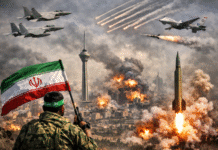
The strikes targeted Iranian military and nuclear-related infrastructure. Iran subsequently launched retaliatory missile and drone attacks against Israel and U.S.-linked facilities in several countries in the region.
According to the Council on Foreign Relations, the opening phase included strikes that killed Iran’s Supreme Leader Ali Khamenei and targeted nuclear and military infrastructure.
Iran has consistently maintained that its nuclear program is intended for peaceful purposes, while the United States and Israel have cited concerns over Iran’s nuclear capabilities as a major justification for military action.
The conflict quickly spread beyond Iran and Israel
Iran’s retaliation did not remain limited to Israel.
Missiles and drones were directed at locations associated with U.S. military operations across the Gulf region. Countries including Qatar, Bahrain, Kuwait, the United Arab Emirates, Saudi Arabia, Iraq, Jordan and Oman were affected by the wider conflict.
The geographic expansion of the fighting created serious concerns for governments throughout the Gulf, particularly because of the importance of the Strait of Hormuz, one of the world’s most important energy shipping routes.
ACLED’s conflict monitoring data recorded thousands of strike events involving U.S.-Israeli forces and Iranian forces since February 28, although the figures are subject to verification and revision.
The Strait of Hormuz becomes a central battleground
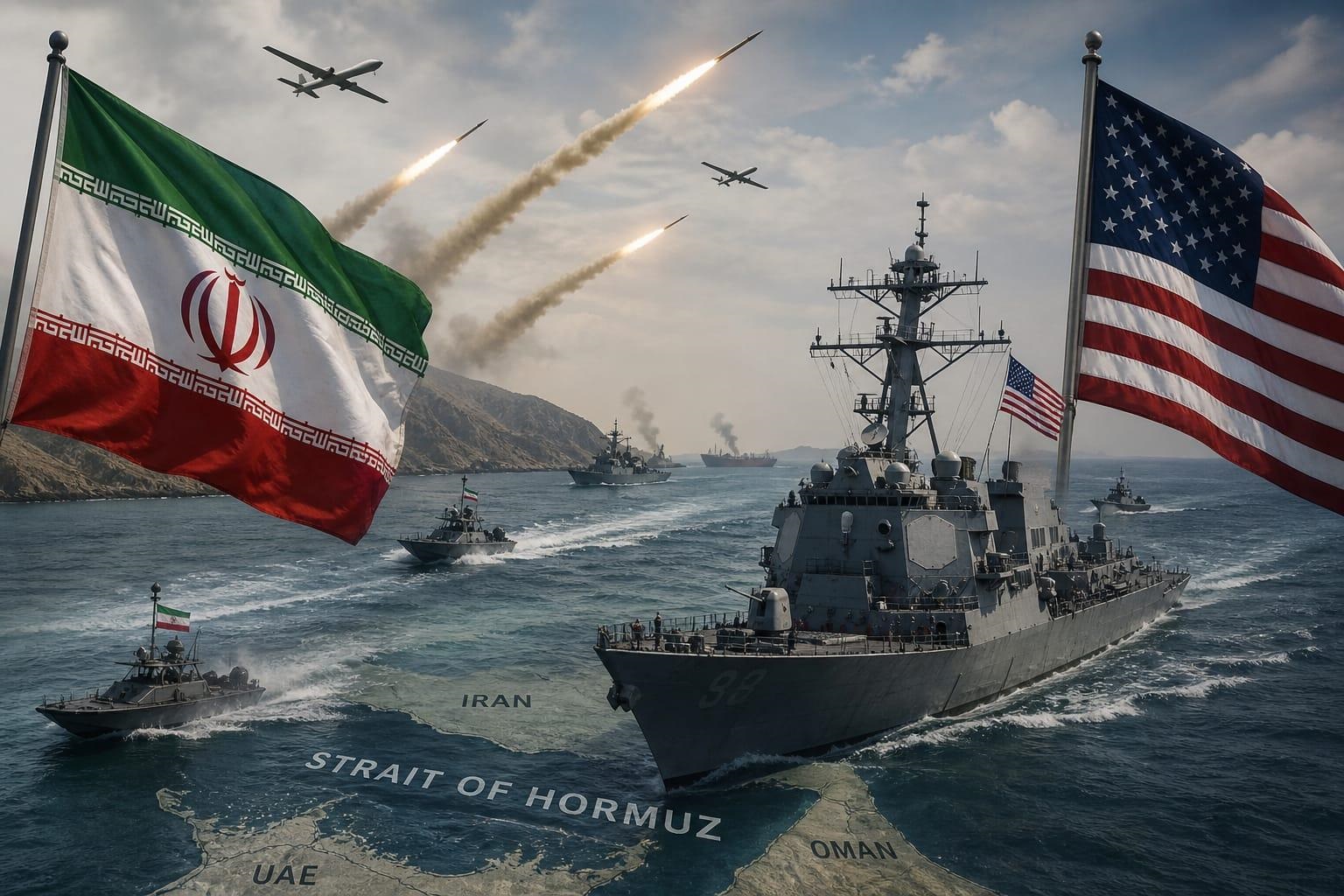
The Strait of Hormuz has become one of the most important strategic issues in the war.
The waterway connects the Persian Gulf with the Gulf of Oman and is a major route for global oil and gas shipments.
During the conflict, Iran attempted to restrict shipping through the area while the United States conducted military operations intended to maintain pressure on Tehran and reopen maritime traffic.
By September, commercial shipping through Hormuz had fallen dramatically. On September 16, preliminary shipping data showed only three commercial vessels transiting the strait, compared with a 10-day average of about 17.
The disruption has contributed to higher global energy prices and increased concerns about fuel supplies.
A temporary ceasefire and diplomatic efforts
After weeks of fighting, the United States and Iran reached an interim arrangement in June aimed at stopping the major fighting and reopening the Strait of Hormuz.
The agreement brought a period of reduced fighting, but it did not resolve the fundamental disagreements between Washington and Tehran.
The main issues included:
- Iran’s nuclear program
- Uranium enrichment
- Sanctions against Iran
- The Strait of Hormuz
- Iranian support for regional armed groups
- U.S. military forces in the region
- Security guarantees
- The future political and security order of the Middle East
The temporary arrangement subsequently came under increasing pressure.
Fighting resumes
In late July and August, the situation deteriorated again.
Iran threatened to adopt a more offensive military posture after negotiations stalled, while Washington indicated that it was not prepared to simply extend the existing ceasefire indefinitely.
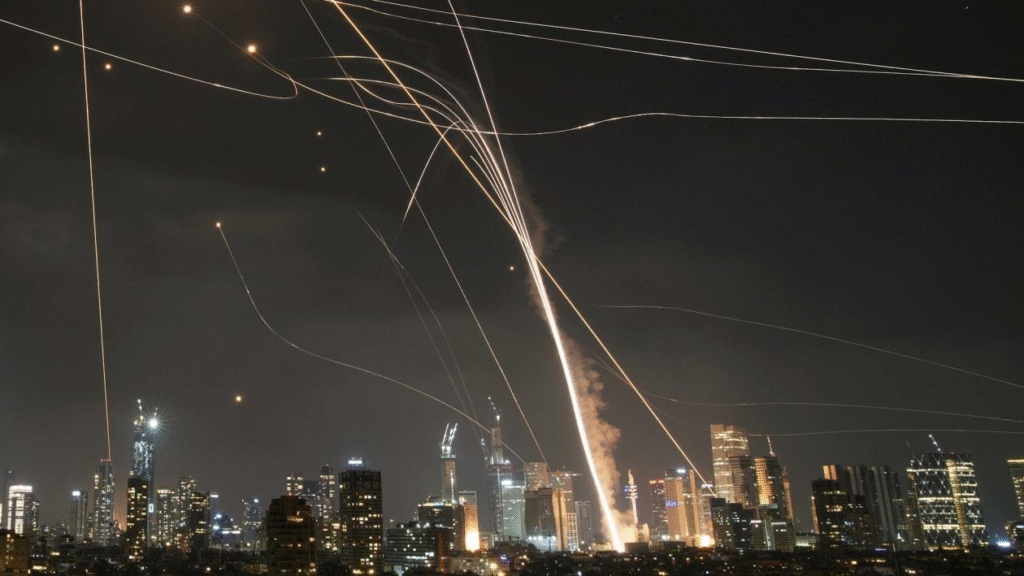
On September 1, the United States launched another major series of strikes against Iranian targets.
Iran responded with attacks against U.S. allies and military-related targets in the Gulf. The renewed fighting represented the most serious escalation in several weeks.
September escalation
The first half of September saw increasing military activity around the Strait of Hormuz.
According to the Council on Foreign Relations’ September 11 update, U.S. forces had struck Iranian Revolutionary Guard targets near the Strait, while Iran announced plans for a new restricted zone and shipping corridor. Iran also claimed to have captured a U.S. underwater drone near the entrance to Hormuz.
On September 9, the United States said it had destroyed five Iranian oil tankers in the Gulf of Oman after attempted Iranian attacks on a U.S. Navy vessel.
Iranian forces subsequently reported missile attacks against a U.S. base in Jordan and attacks against commercial shipping.
Jordan said its air defenses intercepted 18 ballistic missiles.
Oil prices and the global economy
The war is no longer only a military and diplomatic crisis. It has also become a major global economic issue.
The Strait of Hormuz carries a substantial share of internationally traded oil and energy products. Disruption to shipping has therefore affected global energy markets.
Brent crude moved above $100 per barrel in September, according to reporting cited by the Council on Foreign Relations.
The economic effects extend beyond oil:
- Higher transportation costs
- Higher insurance premiums for ships
- Disrupted energy supplies
- Increased fuel prices
- Pressure on inflation
- Increased uncertainty for global markets
- Disruption to Gulf trade
The United States has also incurred substantial military costs. A Pentagon watchdog estimated that the U.S. Department of Defense had spent approximately $33.4 billion on the war through June 29, including ammunition, equipment losses and additional operational costs.
Humanitarian consequences
The human cost of the conflict has been substantial.
Thousands of people have been killed across the region, while millions have been displaced. Civilian infrastructure has also been damaged.
The United Nations has raised concerns about attacks affecting homes, businesses, airports, energy facilities and other civilian infrastructure across Iran, Israel and other countries affected by the conflict.
The exact death toll remains difficult to establish because access to some conflict zones has been restricted and different parties have published different figures.
New UN findings
On September 17, a UN-backed fact-finding mission reported that it had reasonable grounds to believe that the United States was responsible for two strikes in Iran that constituted war crimes.
One involved the Shajareh Tayyebeh Primary School in Minab, where Iranian authorities reported that more than 150 people were killed, including around 120 schoolchildren.
The UN mission also examined a strike on a sports facility in Lamerd that reportedly killed and injured civilians.
The United States has previously said its military operations comply with the law of armed conflict, and U.S. authorities have disputed responsibility for some incidents. The UN investigation is a fact-finding process rather than a criminal court ruling.
The same UN investigation also accused Iranian authorities of crimes against humanity in connection with the government’s response to anti-government protests that began in late 2025.
Lebanon and the wider regional conflict
The war has also affected Lebanon.
Israeli military operations against Hezbollah and fighting involving Hezbollah have repeatedly threatened to widen the conflict.
The United Nations previously reported significant displacement in Lebanon following Israeli strikes and Hezbollah attacks.
The conflict has also involved Yemen and the Iran-backed Houthi movement.
In September, Houthi attacks and Saudi military operations in Yemen further complicated the regional security situation. Reuters reported that attacks affecting Saudi infrastructure and Red Sea shipping were contributing to additional pressure on global energy and maritime routes.
Where things stand on September 17, 2026
The war remains unresolved.
However, there are indications that diplomacy is again being discussed.
U.S. President Donald Trump said on September 16 that he hoped the war was approaching its end and said Iran wanted a deal. Reuters reported that Trump is also expected to meet Gulf Cooperation Council leaders—including representatives from Saudi Arabia, the UAE, Qatar, Bahrain, Kuwait and Oman—during the upcoming UN General Assembly meetings.
On September 17, Trump told Axios that he was approaching a major decision about whether to resume large-scale attacks. The U.S. military presence in the Middle East is expected to remain substantial while Washington considers its next steps.
At the same time, the situation remains highly volatile.
The major unresolved questions
The future of the war will largely depend on several issues:
1. Iran’s nuclear program
Washington wants restrictions on Iran’s nuclear capabilities, while Tehran maintains that its nuclear program is peaceful.
2. The Strait of Hormuz
Restoring stable commercial shipping remains a critical issue for Iran, the United States and Gulf countries.
3. Sanctions
Iran wants relief from extensive international sanctions, while Washington continues to use economic pressure as a major tool.
4. Regional armed groups
The United States has demanded restrictions on Iranian support for armed groups throughout the region.
5. U.S. military presence
The future role of American forces in the Gulf remains a major issue in negotiations.
6. Israeli security concerns
Israel continues to view Iranian military and nuclear capabilities as major security concerns.
A conflict with global consequences
The Iran–Israel–U.S. war has moved far beyond a conventional confrontation between three countries.
It has affected:
Middle East security → Energy markets → Global shipping → International diplomacy → Humanitarian conditions → U.S. military spending → Regional alliances
The Strait of Hormuz has become particularly important because any prolonged disruption could affect energy markets far beyond the Middle East.
For Gulf countries such as Qatar, Saudi Arabia, the UAE, Bahrain, Kuwait and Oman, the conflict presents a particularly complicated challenge because their economies and security environments are closely connected to regional stability.
What happens next?
As of September 17, 2026, there is no confirmed permanent peace agreement.
Diplomatic contacts appear to be continuing, while military forces remain deployed and the possibility of renewed escalation remains.
The coming weeks will therefore be closely watched for developments involving:
- U.S.–Iran negotiations
- The reopening and stabilization of the Strait of Hormuz
- Iranian missile and drone activity
- Israeli military operations
- U.S. military deployments
- Oil prices
- Gulf-state diplomacy
- UN diplomatic initiatives
- The future of Iran’s nuclear program
The situation remains fluid, and information from the battlefield can change rapidly. Any casualty figures, military claims or allegations should therefore be treated cautiously until independently verified.
Latest update
As of September 17, 2026, the Iran war remains active after more than six months of fighting. The United States and Iran are again discussing a possible political settlement, but there is no confirmed permanent agreement. At the same time, fighting and pressure around the Strait of Hormuz continue to pose risks to regional security and global energy markets.