
By Orb Times Editorial Desk
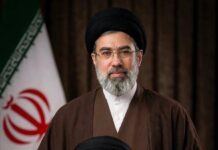
Tehran — Few political figures have shaped the modern Middle East as profoundly as Ayatollah Ali Khamenei. Rising from a modest religious family in northeastern Iran, Khamenei’s life reflects the transformation of Iran itself—from monarchy to Islamic republic and from revolution to regional power.
Today, he stands as the second and longest-serving Supreme Leader of the Islamic Republic, guiding the country through wars, sanctions, and geopolitical upheavals.
Early Life and Childhood (1939–1950s)
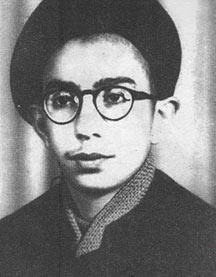
Ali Hosseini Khamenei was born on April 19, 1939, in the holy city of Mashhad. His family lived modestly, and his father, Javad Khamenei, was a respected but financially humble cleric.
Growing up in a small house near the shrine of Imam Reza, Khamenei was exposed early to Islamic scholarship and spirituality.
Despite limited financial resources, his father insisted on strong religious and academic education. Khamenei began studying the Qur’an and classical Islamic sciences at a young age and entered the seminary system during his teenage years.
His childhood was marked by discipline, religious learning, and a deep sense of social justice—values that later shaped his political worldview.
Religious Education and Intellectual Formation
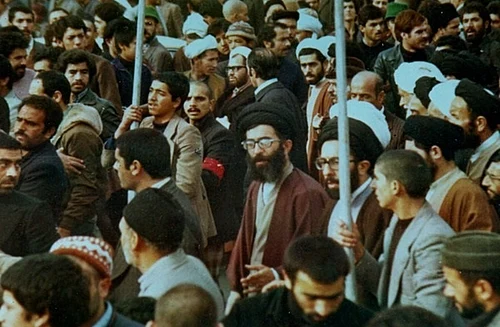
In the 1950s, Khamenei moved to the city of Qom, Iran’s most important center of Shia scholarship.
There, he studied under leading Islamic scholars, most notably Ruhollah Khomeini, whose teachings strongly influenced him.
During this period, Khamenei developed interests beyond theology. He studied:
- Islamic philosophy
- Political theory
- Literature and poetry
- Translation of Islamic works
He later translated works of Islamic thinkers into Persian, showing his intellectual engagement with revolutionary Islamic thought.
Opposition to the Shah and Revolutionary Activities
During the 1960s and 1970s, Iran was ruled by Mohammad Reza Pahlavi, whose pro-Western modernization policies and authoritarian rule angered many religious scholars.
Khamenei became an active supporter of Ayatollah Khomeini’s movement against the Shah.
His activism included:
- Delivering anti-government speeches
- Organizing underground religious networks
- Promoting Islamic political ideology
Because of this activism, he was arrested several times by the Shah’s intelligence agency, SAVAK, and spent periods in prison and exile.
These experiences strengthened his revolutionary reputation among Iran’s clerical and political circles.
The 1979 Islamic Revolution
The turning point in Khamenei’s life came with the Iranian Revolution, which overthrew the Shah and established the Islamic Republic under Ayatollah Khomeini.
Khamenei quickly emerged as one of the revolution’s key political figures.
He held several important roles in the newly formed government, including:
- Member of the Revolutionary Council
- Deputy Minister of Defense
- Representative of Ayatollah Khomeini in the military
His influence continued to grow during the early years of the Islamic Republic.
Assassination Attempt and Rise to Presidency
In 1981, Khamenei survived a dramatic assassination attempt when a bomb hidden in a tape recorder exploded during a speech.
The attack severely injured his right arm, leaving it partially paralyzed for life.
Later that same year, he was elected President of Iran, serving from 1981 to 1989.
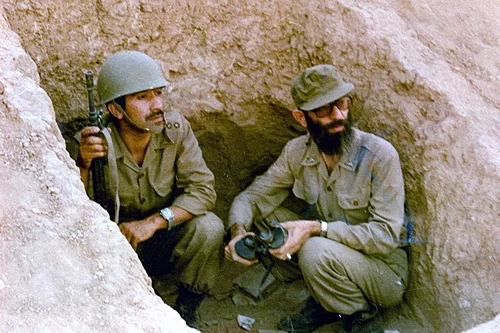
During his presidency, Iran was deeply involved in the Iran–Iraq War against Saddam Hussein. The war shaped Iran’s political and military structure and strengthened revolutionary institutions.
Khamenei worked closely with Ayatollah Khomeini during this period.
Becoming Supreme Leader (1989)
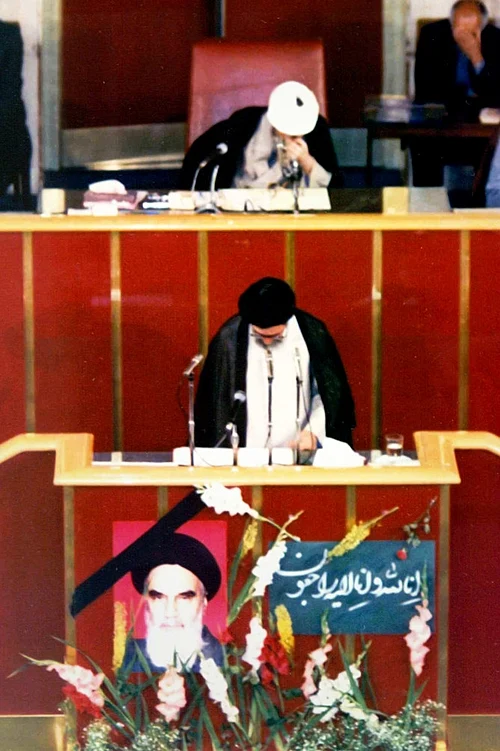
Following the death of Ayatollah Khomeini in 1989, Iran faced a leadership transition.
The Assembly of Experts selected Ali Khamenei as the Supreme Leader of Iran, making him the highest authority in the country.
As Supreme Leader, he gained authority over:
- The armed forces
- The judiciary
- State media
- Major strategic policies
Over the decades, he has overseen Iran’s transformation into a significant regional power.
Leadership and Global Influence
Since 1989, Khamenei has guided Iran through major geopolitical challenges including:
- Western economic sanctions
- Nuclear negotiations
- Regional conflicts in the Middle East
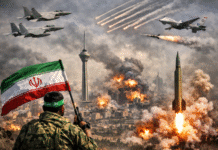
- Tensions with the United States and Israel
He has consistently promoted policies emphasizing:
- Political independence from Western powers
- Support for regional resistance movements
- Expansion of Iran’s scientific and military capabilities
Under his leadership, Iran has developed advanced missile technology and expanded its influence across the region.
Cultural and Intellectual Interests
Despite his political role, Khamenei maintains a strong interest in literature and culture.
He is known for:
- Writing poetry
- Reading classical Persian literature
- Supporting Islamic arts and culture
Many observers describe him as a scholar-leader who blends political authority with intellectual interests.
Legacy and Historical Significance
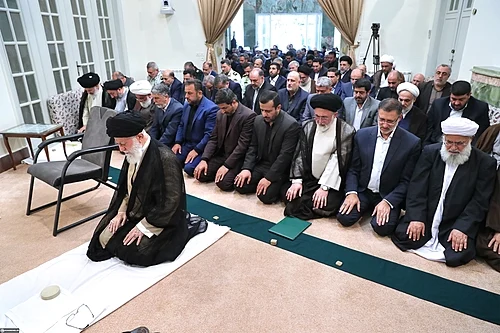
More than three decades after assuming power, Ayatollah Khamenei remains one of the most influential figures in the Islamic world.
Supporters view him as:
- A defender of Islamic independence
- A guardian of the revolution
- A leader who resisted Western pressure
Critics argue his rule has been marked by political restrictions and confrontation with the West.
Regardless of perspective, his impact on Iran and the Middle East is undeniable.
Conclusion
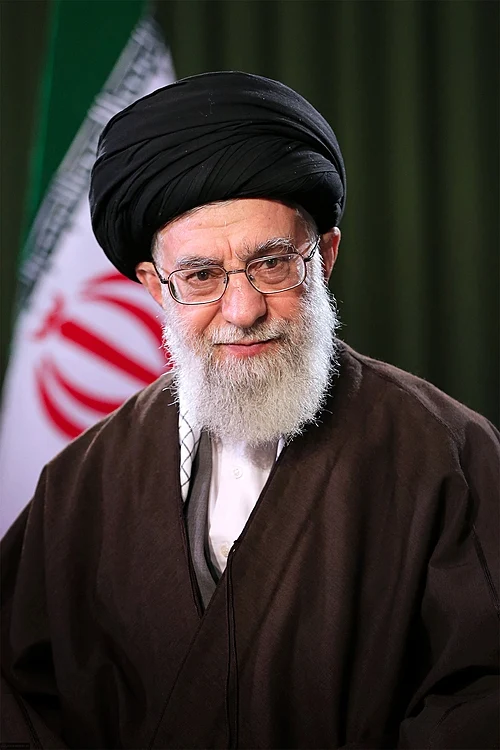
From a modest childhood in Mashhad to becoming the most powerful figure in Iran, Ayatollah Ali Khamenei’s journey mirrors the evolution of the Islamic Republic itself.
As Iran navigates an increasingly complex geopolitical environment, his leadership continues to shape the country’s political identity and its role on the global stage.